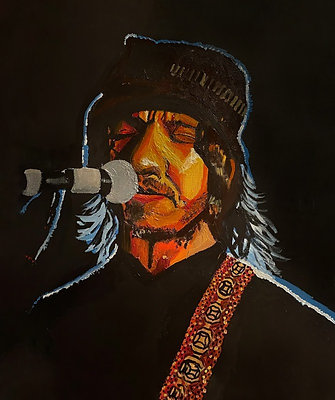
Elliott Smith
Elliott Smith is my favorite musician of all time. I first heard him in a Dallas movie theater my freshman year of college, watching Good Will Hunting. When "Angeles" came on, I felt like I had somehow commissioned that song myself. I felt like it had been written just for me. He took such difficult things and made them into such beautiful music.
At 19, living alone in my first apartment, I was busking with a plastic-back guitar to make extra money. I loved it enough that I'd skipped groceries for a week to buy that crappy plastic guitar.
One night I came home from a midnight waitressing shift at El Chico and found a message on my answering machine: "This is Elliott Smith. Call me back at this number."
It was too late to call. I was too excited. I didn't sleep.
In the morning I dialed the number. It was a journalist named Elliott Smith. A Latin American bureau editor for USA Today, trying to track down a whistleblower on a story about slaughterhouses in the Texas Panhandle. Jessica Smith is a common name. People still used phone books. The wrong Elliot had called the wrong Jessica.
He asked why I called him back, and I told him. He knew who the musician was, and instead of hanging up, we became email friends. He thought my life was interesting. I thought his was fascinating.
Eventually he asked for my mailing address to hold something for him until he returned to the US. I got scared, so I gave him the address of El Chico. A few days later, my boss called: there was a package taking up most of the office.
I opened it. Inside was a 1945 Kay archtop guitar. Rare. Beautiful, and nearly extinct. The Kay company had created a premium line to compete with Les Paul guitars in the 40s; the expense bankrupted them. Their remaining stock sat in a warehouse until lightning struck and burned it down. Very few survived.
There was a note: "Stop playing that plastic guitar."